By Ella Brassinga
Student Entrepreneurs
Between classes, internships and late night study sessions at The University of Alabama, some students are building more than résumés, they are building businesses.
Scrolling through Instagram in Tuscaloosa becomes clear that campus creativity does not stop at the classroom door.
Students are selling handmade jewelry, offering photography packages, flipping thrifted finds and launching clothing brands, often starting with nothing more than an idea and an Instagram account. What begins as a hobby can quickly evolve into a steady income stream, and for some, a full business.
Ellison Harris, a junior at The University of Alabama, her journey began in her freshman dorm room.
“I started my business when I was 18, during freshman year at Bama,” said Harris. “Honestly, it began with my freshman roommate. Since everyone was always asking to borrow my clothes, she said I might as well rent them out.”
At first, Harris did not take the suggestion seriously. Sharing clothes was part of college culture. The requests kept coming, especially before football game days, sorority date parties and formals. The repeated interest made her see something bigger.
“Girls wanted access to luxury outfits without paying luxury prices,” said Harris. “That’s when I realized it wasn’t just a compliment. It was an opportunity.”
Harris started small, posting a few dresses on a separate Instagram account to test demand. When students began renting pieces, she reinvested every dollar back into purchasing new inventory.
“It started super casually,” said Harris. “Once I saw that people were actually renting from me, I reinvested every dollar back into new dresses solely to rent out.”
Harris developed clear rental rules, structured pricing at around 9–10% of retail value and created organized systems for local pickup and nationwide shipping. What began as “renting out my closet” gradually transformed into a structured business with intentional inventory and branding.
The pricing model made luxury fashion more accessible to college students. Instead of purchasing expensive dresses they might only wear once, customers could rent high end pieces at a fraction of the cost. On a campus where social events often call for standout outfits, the concept quickly resonated.
As demand increased, Harris faced a new challenge, space. Running the operation out of her sophomore year house became unsustainable as inventory grew and appointments multiplied.
“I realized my sophomore year house wasn’t going to work running a business out of,” said Harris. “I needed space to display inventory properly and create a real shopping experience.”
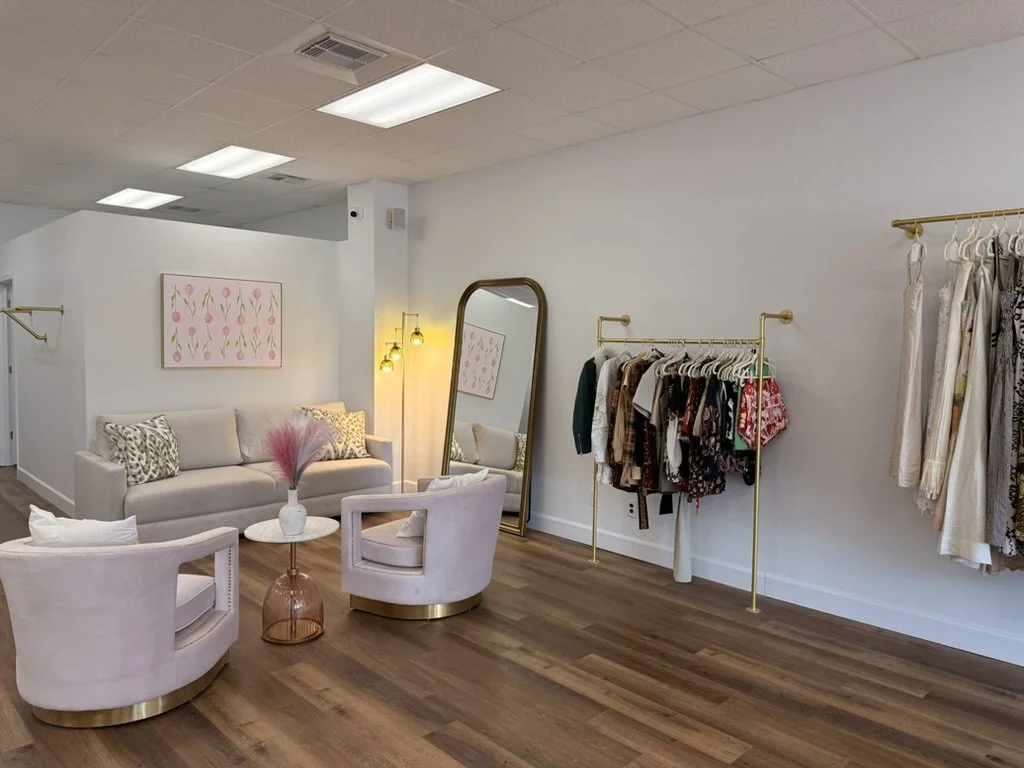
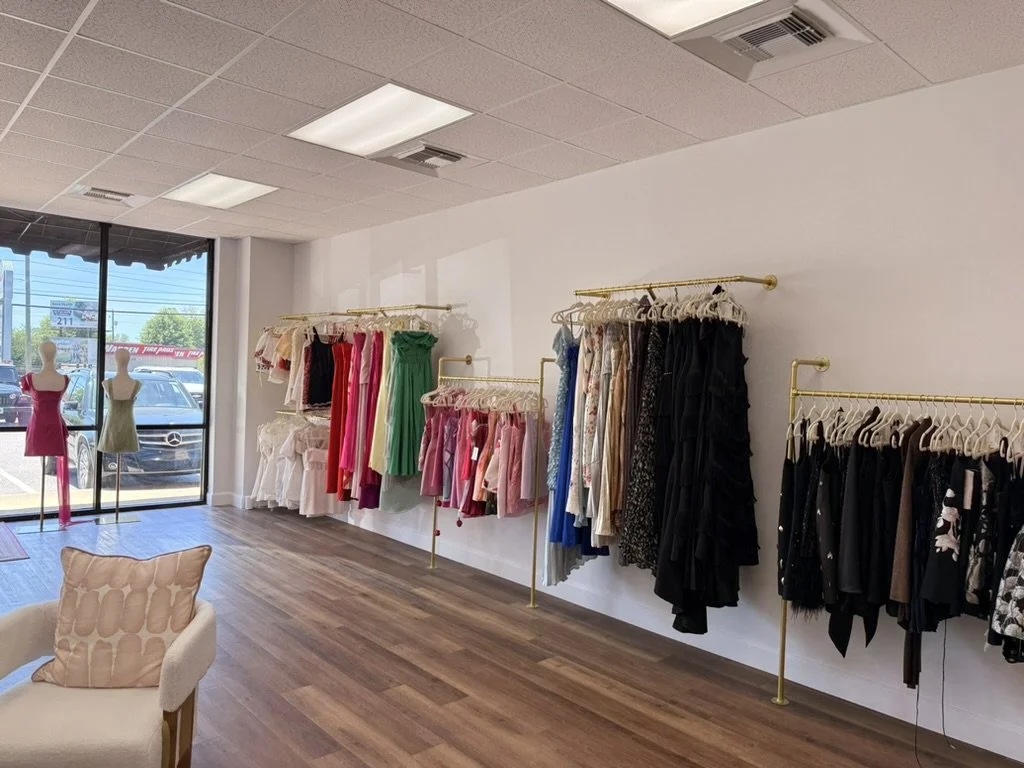
At 20 years old, Harris signed a lease on an entire property and converted it into a storefront. The decision came with financial risk, especially while balancing a full course load.
“It was definitely intimidating,” said Harris. “Renting an entire property at 20 while still in school was not the ‘safe’ option.”
Harris leaned on advice she received when she first left home for college. “Someone close to me told me to ‘say yes to everything,’” said Harris. “I knew I would regret not trying more than I would regret failing.”
The storefront marked a turning point. Instead of coordinating porch pickups or dorm meetups, customers could browse racks in person, try on dresses and evaluate quality firsthand. The physical space increased foot traffic and elevated the brand’s credibility.
“Having a storefront allows customers to try things on, see quality in person and feel confident before renting,” said Harris. “It also creates more of a ‘business’ feel.”
While she continues to ship dresses nationwide, Harris said the brick and mortar location builds something social media alone cannot.
“It creates community,” said Harris. “It makes the brand tangible rather than just another Instagram page.”
Despite the polished storefront and steady customer base, balancing business ownership with academics remains her biggest challenge.
“Time management and creating a life balance is my biggest challenge,” said Harris. “I have to plan everything, work schedules, personal life, shipping schedules, all around classes and exams.”
Orders do not pause during midterms, and customer messages still need responses during finals week. To maintain balance, Harris treats her business like a traditional job with clear boundaries.
“I do not do business from home so that I can create separation,” said Harris.
That separation allows her to focus when studying and disconnect when she leaves the store. Running a business while earning a degree has required discipline and maturity beyond her years.
“Balancing everything has forced me to prioritize long-term goals over short-term distractions,” said Harris.
Beyond logistics, Harris said entrepreneurship has reshaped her confidence. She entered college without formal business experience but has since learned to manage finances, assess risk and negotiate under pressure.
“I didn’t know anything when it came to business,” said Harris. “But over time, I’ve learned how to make financial decisions, manage risk, negotiate and problem-solve under pressure.”
Perhaps the most valuable lesson, said Harris, is the importance of execution. “Lots of people have ideas,” said Harris. “But very few people act on them.”
Her brand centers on accessibility and confidence. In a culture that often equates ownership with status, Harris offers a different message.
“My brand is about accessibility and confidence,” said Harris. “I want girls to feel like they can wear luxury pieces without spending thousands of dollars. You don’t have to own everything to still wear what you want.”
The UA community, Harris said, has played a significant role in her growth. Word spreads quickly on campus, especially during high demand seasons like football weekends and formal events. Having a local storefront makes it convenient for students to stop by between classes or before a big night out.
“The support has honestly exceeded my expectations,” said Harris.
Harris is part of a broader wave of student entrepreneurs who are turning creative passions into structured ventures. Whether selling products online, offering services or hosting pop-up shops around Tuscaloosa, these students are gaining real-world experience alongside their coursework.
College provides a unique environment for launching something new. The network is built in. Marketing spreads quickly through word of mouth. And for many students, the risk feels more manageable than it might later in life.
“College is actually one of the best times to build something,” said Harris. “There will not be another time in your life where you will be surrounded by such a huge network of people.” Her advice to other students is simple.
“Start small, but start,” said Harris. “Test the idea before overcomplicating it. Pay attention to demand. Reinvest your profits. And don’t wait until you ‘feel ready.’”
Between lectures and late nights at the library, students like Harris are proving that entrepreneurship does not require a corporate office or a post-graduate plan. Sometimes, it begins with a roommate’s suggestion, and the willingness to say yes.